Spring Blooming Flowers for Seasonal Color
After a long winter, it's time for spring landscaping!
Wow what a nice day today is. Temps in the mid 50s, sun breaking through the clouds sure felt good after the winter we’ve had. As such I was out in my own yard surveying the beds, the lawn etc, when I espied these “Heralds of Spring” popping up where only a few days before 5 i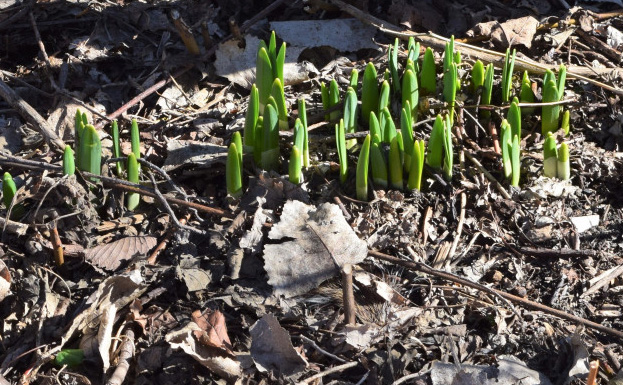 nches of snow lay. And walking a little further, here and there they were. Daffodils popping through the damp and warming earth. Then I got to thinking about my favorite early spring blooming flowers.
Early spring flowers are the surest sign that warmer weather is coming. Come springtime when you are out and about have you ever wondered “just what are those beautiful flowers in that landscape?” I admit, as much as I know my plants and flowers, I often find myself going “Whoa, what is that? It’s beautiful.” I love it when I’m stumped.
Chances are it may be one of the plants below which all burst forth in spring with dazzling displays of color and hues. Sure there are pansies in this list, but what is Spring without Pansys?
Anyway, this synopsis or list of early spring flowers will give you ideas for the best flowers to plant in spring. And when your plants begin to show signs of growth after their winter’s respite, consider fertilizing them. Apply fertilizer at the recommended rate when growth resumes in the spring. Perennials with long lasting foliage or those having an extended bloom periods may benefit from a second application at the same rate 6 to 8 weeks later.
Hover over the plant name below the image and you can open a small pop up with relative information as per spring blooming plant species.
Mother Nature’s Spring Jewels

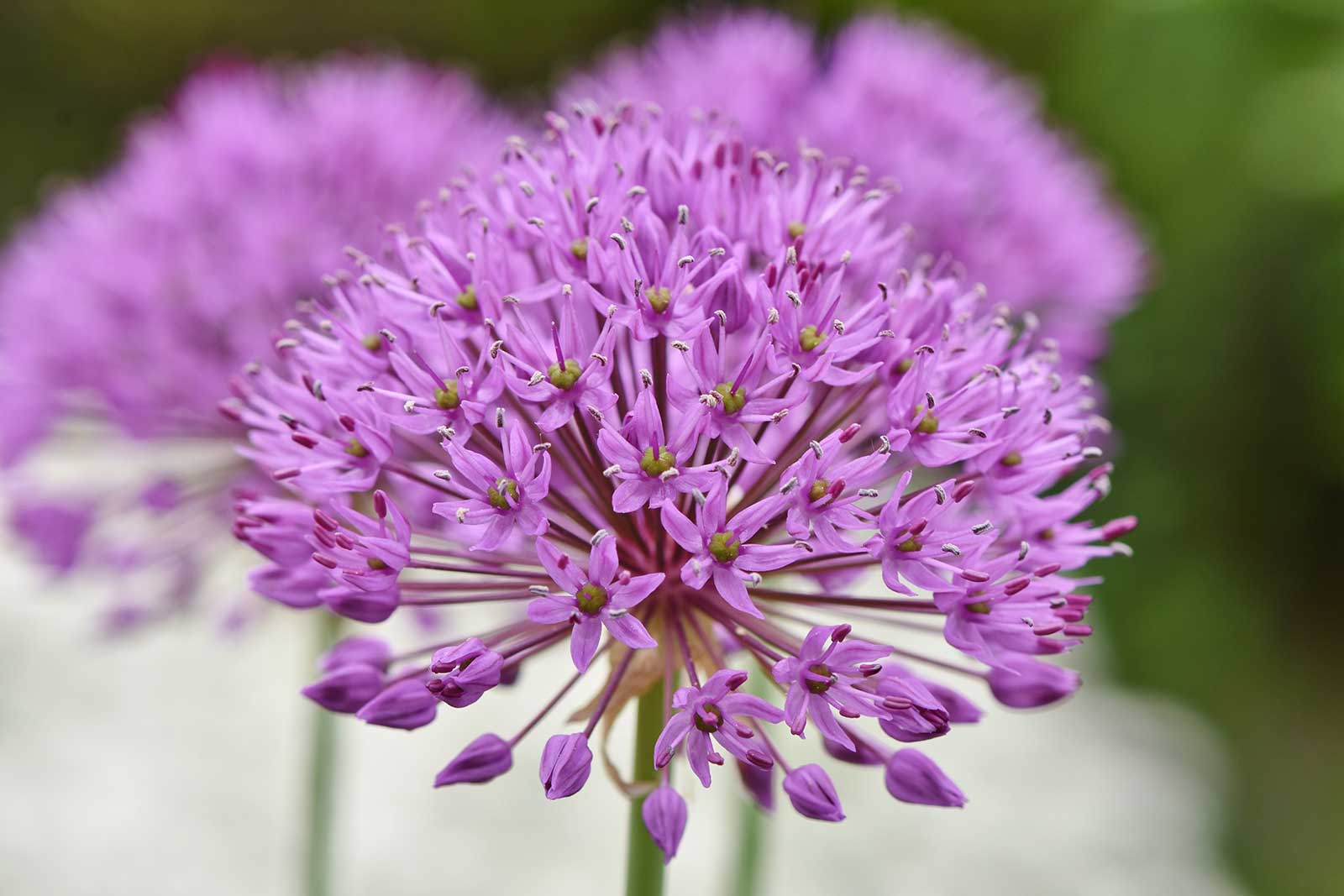 Alliums grow best in full sun, though most types will also tolerate partial shade. It’s hard to believe this stunning flower is a close relative of the onion. Allium holds its stunning bloom high above the foliage, adding whimsy and drama to any planting beds. Alliums are well-suited to rock gardens, where they thrive in the well-drained pockets between rocks. Choose species that are smaller in size, such as Allium flavum, Allium karataviense and Allium sikkimense.
The fact that most alliums are also bulbs also works to their advantage. By storing water and nutrients, these plants are extremely drought tolerant and can survive long dry spells that might kill other plants without the benefit of a storage root. Because alliums generally form bulbs, they need well-drained soils. Alliums make great additions to gravel gardens and hellstrip gardens, and dwarf varieties also make great accents in troughs and small containers.
Deer resistant and dynamic, these bulbs provide color from the first showers of spring to the last leaves of fall. Alliums actually come in oval, spherical, or globular flower shapes, blooming in magnificent colors atop tall stems. Alliums can be grown in Zones 3 to 9, depending upon the species and cultivar.
[/ultimate_modal]

 Creeping phlox gives your garden bed and pretty and colorful spring carpet with pretty pastel shades of many colors. This long lasting, aromatic, and showy flowers have become a staple in today’s spring landscapes. Some varieties flower later, as well. There is also a summer blooming variety which is more upright than the creeping variety of phlox.
Creeping phlox is a familiar spring-blooming creeping plant that is frequently seen in rock gardens, growing from crevices in stone walls, or planted as a ground cover to blanket areas of the ground. Surely the best feature of creeping phlox is its flower production. Not only are the individual blooms pretty, but there are also so many of them that the display is truly something special to behold. The flowers are so densely packed that it can be hard to make out the plants’ foliage from a distance; once blooming is completed, the tiny leaves remain green for much of the year.
Since creeping phlox plants stay short and spread easily, they are widely used as ground covers. These colorful, low-growing plants not only help prevent erosion but also blanket the slope with vibrant color in spring. The plants’ ability to spread over time will be appreciated by gardeners who need a ground cover that will fill in an area.
A plant that attracts butterflies, creeping phlox is a splendid choice for butterfly gardens. Luckily, deer are less likely to eat this plant than many others, qualifying it as a relatively deer-resistant ground cover.
[/ultimate_modal]
 Brunnera Macrophylla “Jack Frost” is one of the prettiest plants to include in the shady garden. Commonly called false forget-me-not, petite blooms compliment attractive, glossy foliage. Brunnera Siberian bugloss is also called heartleaf brunnera because of the shape of its leaves. It is an herbaceous perennial, dying back in winter. The light blue blooms of brunnera plants rise above the leaves of various cultivars.
Brunnera plants have leaves that are glossy green or in variegated hues of gray, silver or white, such as the popular cultivar ‘Jack Frost.’ Brunnera Siberian bugloss blooms in early to mid spring. When growing brunnera, locate the plant in part to full shade, in well-drained soil that can be kept consistently and lightly moist.
One of Brunner’s common names, bugloss, is derived from the Greek words for “ox” and “tongue”, as the leaves are thought to resemble an ox tongue. Whether or not that is true, it is true that Brunnera plants are deer resistant. Brunnera is also a great choice for containers. The variegated leaf varieties will make a nice filler throughout the season. Many are hardy enough to remain in containers throughout the winter, with a little extra protection.[/ultimate_modal]
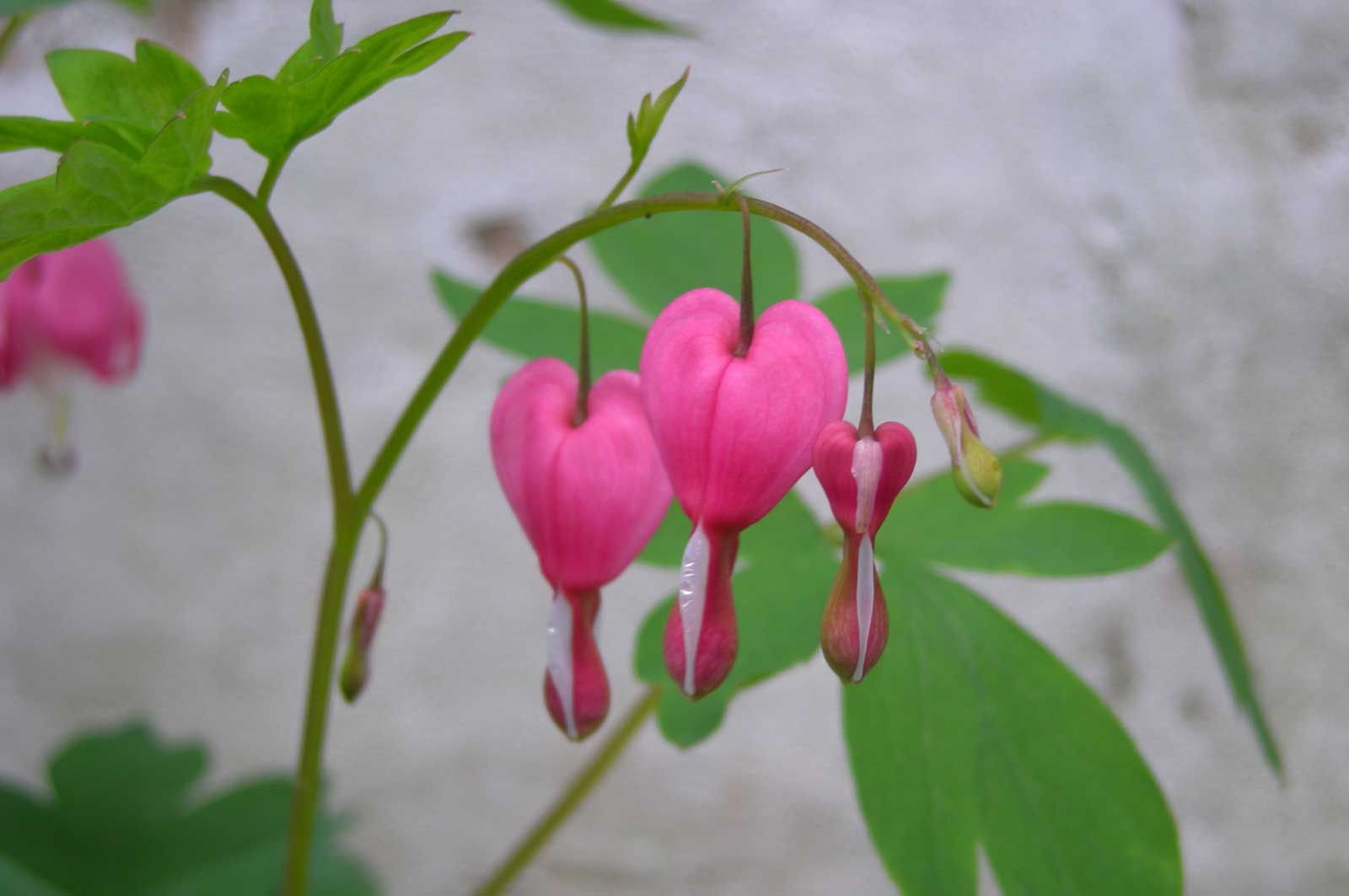

A garden favorite for many years, bleeding heart has soft green foliage and 1-inch-long rose pink and white heart-shaped flowers for several weeks in spring. The arching stems of little pink hearts that “bleed” white. Plants can form clumps 3 feet across and almost as tall. Foliage generally goes dormant in summer, so be sure to choose companion plants carefully so there isn’t an empty space left in the garden. Beautiful in a border or woodland garden.
Bleeding Hearts make fantastic companion plants for ferns, hostas, astilbe, and other shade-lovers. Bleeding heart are deer resistant, easy to grow, and dependably perennial. Blooms of the bleeding heart plant (Dicentra spectabilis) appear in early spring adorning the garden with attention getting, heart shaped flowers borne on arching stems. Attractive bluish green foliage emerges first as the plant wakes from dormancy and flowers of the bleeding heart may be pink and white or solid white as with the bleeding heart cultivar ‘Alba’.
Bleeding heart flower care includes regular fertilization of the growing bleeding heart. When foliage emerges in spring, time release plant food may be worked into the soil around the plant, as may additional compost. This is an important step in growing bleeding heart, as it encourages more and longer lasting blooms. An herbaceous perennial, the bleeding heart plant dies back to the ground as the heat of summer arrives. As the bleeding heart plant begins to yellow and wither away, foliage may be cut back to the ground as a part of care for bleeding heart. Do not remove the foliage before it turns yellow or brown; this is the time when your bleeding heart plant is storing food reserves for next year’s growing bleeding hearts.
[/ultimate_modal]
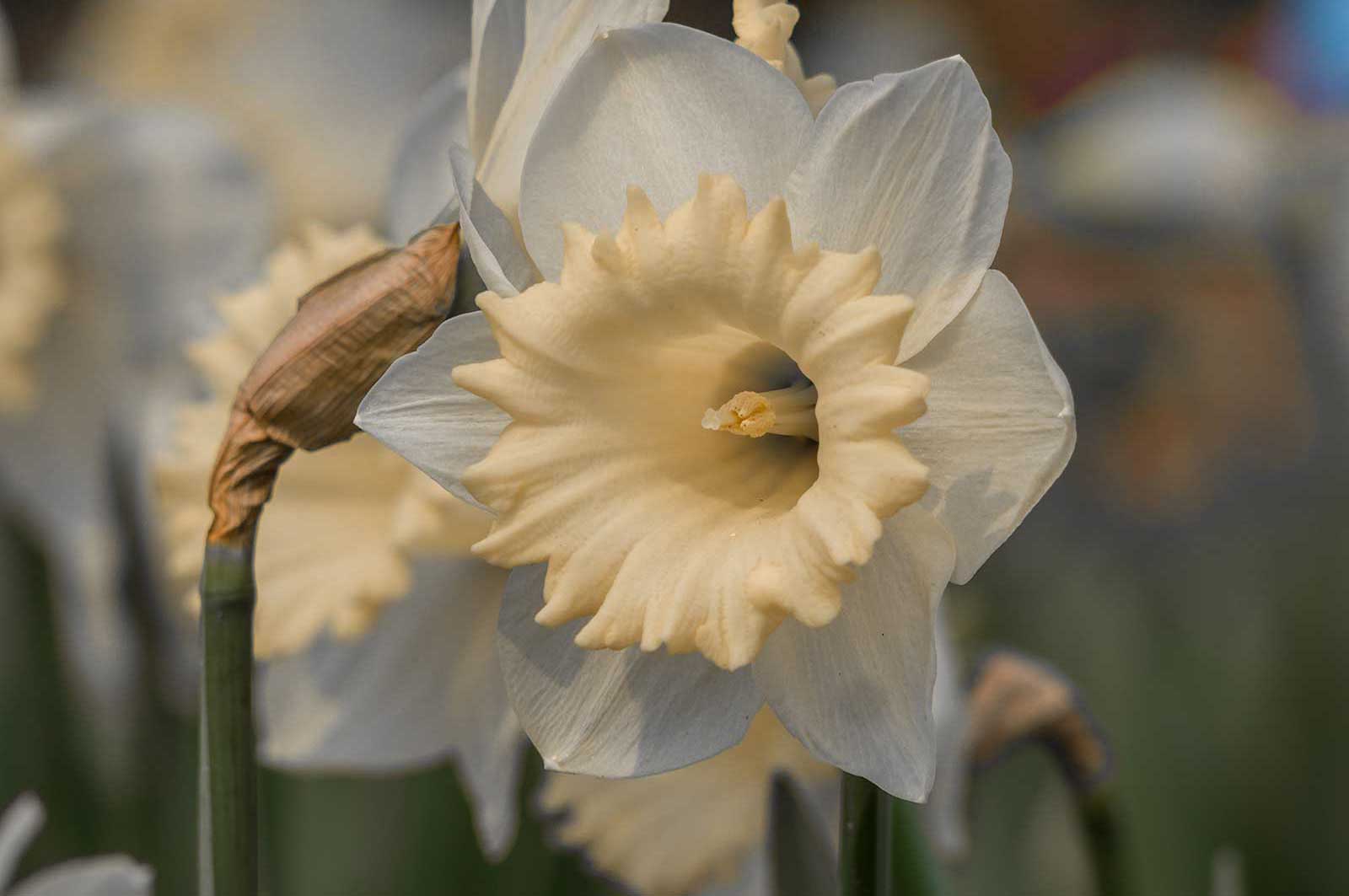
 Daffodils, also known by their botanical name narcissus, are easy and reliable spring-flowering bulbs. They multiply quickly and return to bloom again each spring, year after year. They are not fussy about soil, will grow in sun or shade and are not bothered by deer, rabbits and other pesky critters. Yellow is by far the most common color for daffodils, but the blossoms also come in other colors such as white, cream, orange and even pink. Planting an assortment of different types of daffodils will give you 4 to 6 weeks of beautiful, carefree flowers every spring.
Daffodil flowers have a trumpet-shaped structure set against a star-shaped background. Daffodils come in all sizes, from 5-inch blooms on 2-foot stems to half-inch flowers on 2-inch stems. Flowers usually face the sun; be sure to keep this in mind when choosing a planting spot. Use narcissus under high-branching trees and flowering shrubs, among ground cover plantings, in woodland and rock gardens, or in borders. Naturalize them in sweeping drifts. Grow them in containers. They make fine cut flowers, though they should have a vase of their own; freshly cut stems release a substance that causes other cut flowers to wilt.[/ultimate_modal]

 One of the prettiest flowers in the garden is the Virginia bluebells flowers. An erect, clump-forming perennial native to North America, it grows 1-2′ tall and features loose, terminal clusters of pendulous, trumpet-shaped, blue flowers (to 1″ long) which bloom in early spring. Flower buds are pink and flowers emerge with a pinkish cast before turning blue. Smooth, oval, bluish green leaves (to 4″ long).
Bluebells flowers will grow to a height of 18 to 24 inches tall, so they make a great naturalization plant for your yard in corners here and there, or even as a backdrop in your flowers garden behind the other plants. Their color goes well with other color with blue hues and even with magentas and reds. The flowers start off pink and gradually turn over to their famous shade of light blue as they mature.
Bees, especially female Bumblebees that fly in early spring, will often be seen visiting the flowers. Only the largest bees have the ability to push their way up the tube. The real champions of bluebell pollination are butterflies and moths. It is stunning to watch them perch delicately on the rim of the flower. A colony of bluebells is truly an amazing sight to behold! The blooms will last for many weeks in early spring (April and May) and will go dormant by mid-summer.[/ultimate_modal]
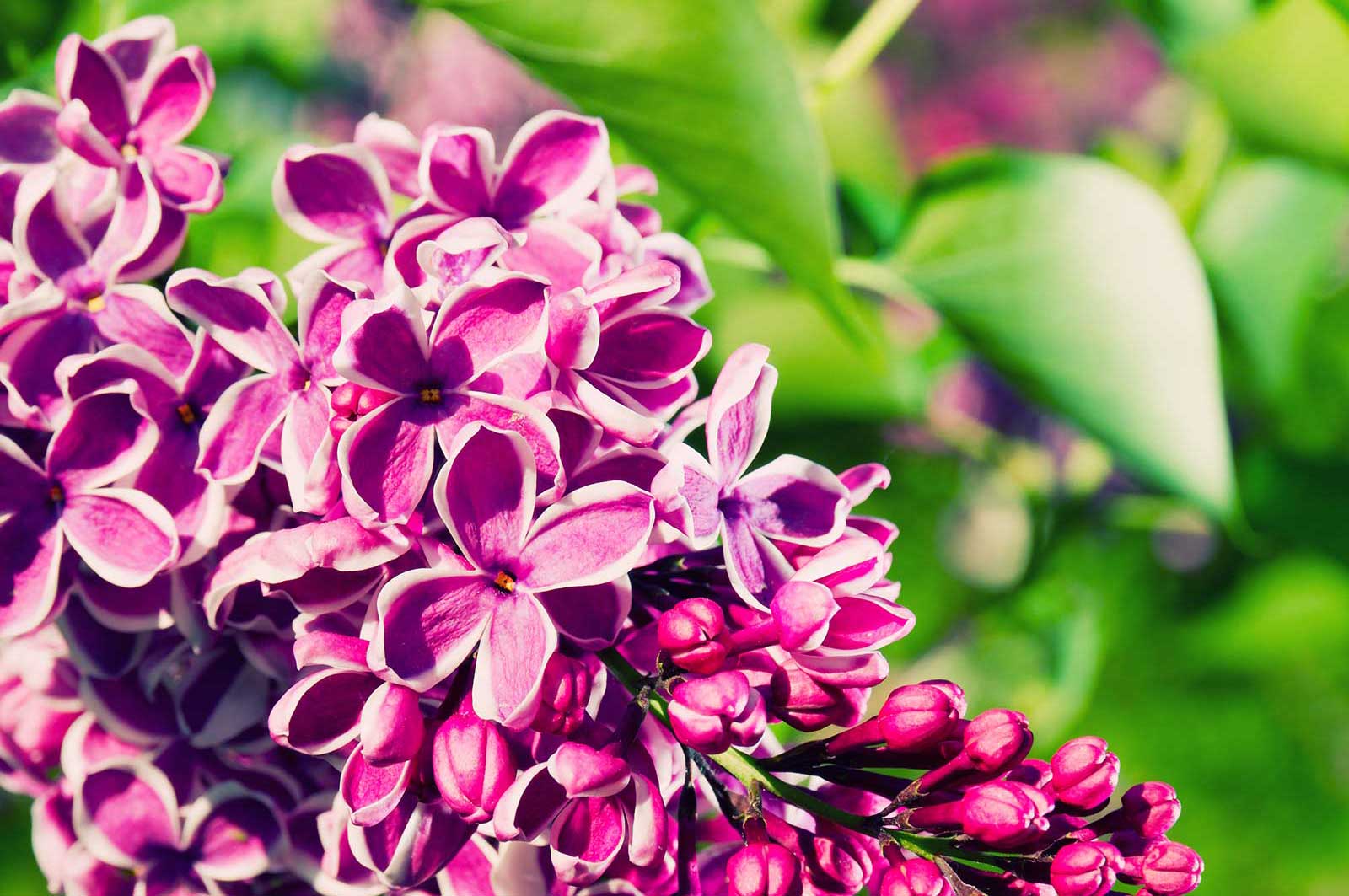
 Syringa vulgaris, commonly known as common lilac, is an upright, multi-stemmed, suckering, deciduous shrub in the olive family that typically matures to 12-16’ (20’) tall with a spread to 8-12’ (15’) wide. It is particularly noted for its mid to late spring (May) bloom of very fragrant, tubular, 4-lobed, lilac to purple flowers (each to 1/3” long) which bloom in large conical to narrow-pyramidal panicles (to 6-8” long). Flowers attract birds and butterflies.
A reliable spring-flowering shrub for cold winter landscapes. Excellent as a specimen/accent or in small groups. Shrub borders. Hedges or screens. Cottage gardens. Margins of woodland gardens. Good cut flower. The common lilac is an old-fashioned, long-lived, and well-loved lilac best known for its fragrant flowers. It is extremely hardy and thrives with little care which make it a lovely shrub for a specimen planting, in masses, screens, hedges, or mixed in shrub borders. The Spring blooming flowers are typically purple to lilac but cultivars also come in magenta, pink and white.
Grow lilacs in fertile, humus-rich, well-drained, neutral to alkaline soil (at a pH near 7.0). If your soil is in poor condition, add compost to enrich. Lilacs bloom on old wood, so it’s critical to prune in the spring right after they bloom. If you prune later in the summer, you may be removing the wood. Here’s a tip: If your lilac flower clusters are getting smaller, time to prune! To improve the flowering of lilacs, keep the grass from growing around them. A 16- to 24-inch circle of landscape cloth placed around the bushes and covered with bark or stone will keep the grass down.[/ultimate_modal]
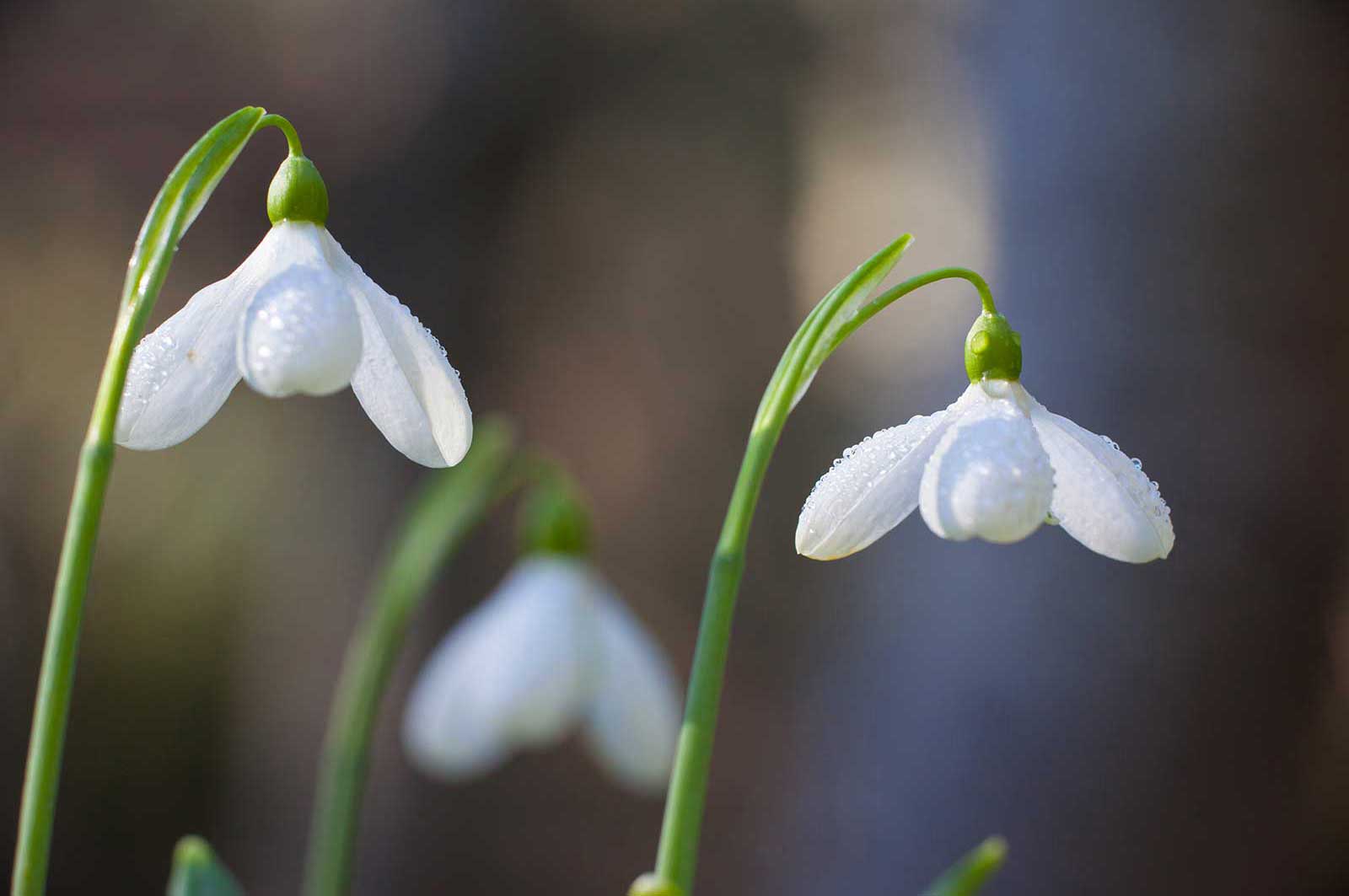
 As the name suggests, snowdrops (Galanthus nivalis) are one of the first of all spring flowers to bloom; depending on region, they appear in February and March, often while snow still blankets the ground. This low-growing plant tolerates partial shade to full sun, a variety of soil types, and requires almost no maintenance. Snowdrops are a pest-free plant. Rabbits and deer won’t eat them either, and most chipmunks and mice will leave them alone.
Common snowdrops are tiny plants (3 to 6 inches tall) that produce one small (1 inch or less), white flower, which hangs down off its stalk like a “drop” prior to opening. When the bloom opens, three outer petals arch out over three inner petals. The leaves are shaped like narrow blades, growing about 4 inches long.
Easily grown in average, medium moisture, well-drained soils in full sun to part shade. Prefers moist, humusy soils in part shade. Grows particularly well under deciduous trees where exposure to the sun is full in early spring but gradually changes to part shade as the trees leaf out. Also prefers cool climates, and tends to be somewhat short-lived when grown south of USDA Zone 7. Plant bulbs 2-3” deep and space 2-3” apart in fall in groups of at least 25 bulbs. In optimum growing conditions, this bulb will naturalize well by both self-seeding and bulb offsets to form large colonies. Allow foliage to yellow after bloom before removing it from garden areas. If left alone, foliage disappears by late spring as bulbs go dormant.
[/ultimate_modal]

 These short-lived perennials or biennials are charming plants, and are worth their weight in gold in the cottage border. After flowering, the attractive foliage holds the space well. They grow in various shades of red, pink, purple and white. Some can have a variety of colors on one plants, which is fun too. They belong to the family of carnations and have a peculiar spicy aroma when they bloom.
Their mounded structure, produce flowers in clusters. The most popular annual variety of Dianthus plants is Chinese pinks also called dianthus chinensis. Hardy in zones 6-9, with proper care Dianthus Chinesis does great as a container plant. Sweet Williams is a bright fragrant flowers which reseeds itself and is biennial in nature. Some double flowering varieties like Allwood pinks develop in a range 6 – 18 inches in height.
Fertile, alkaline and well-drained soil is suitable for growing these perennials. They should be planted in a spot where they receive partial sunlight for at least 4-5 hours of the day. Sweet Williams plants cannot bear over watering as it turns the foliage yellow. Watering once a week is just enough for Dianthus.[/ultimate_modal]
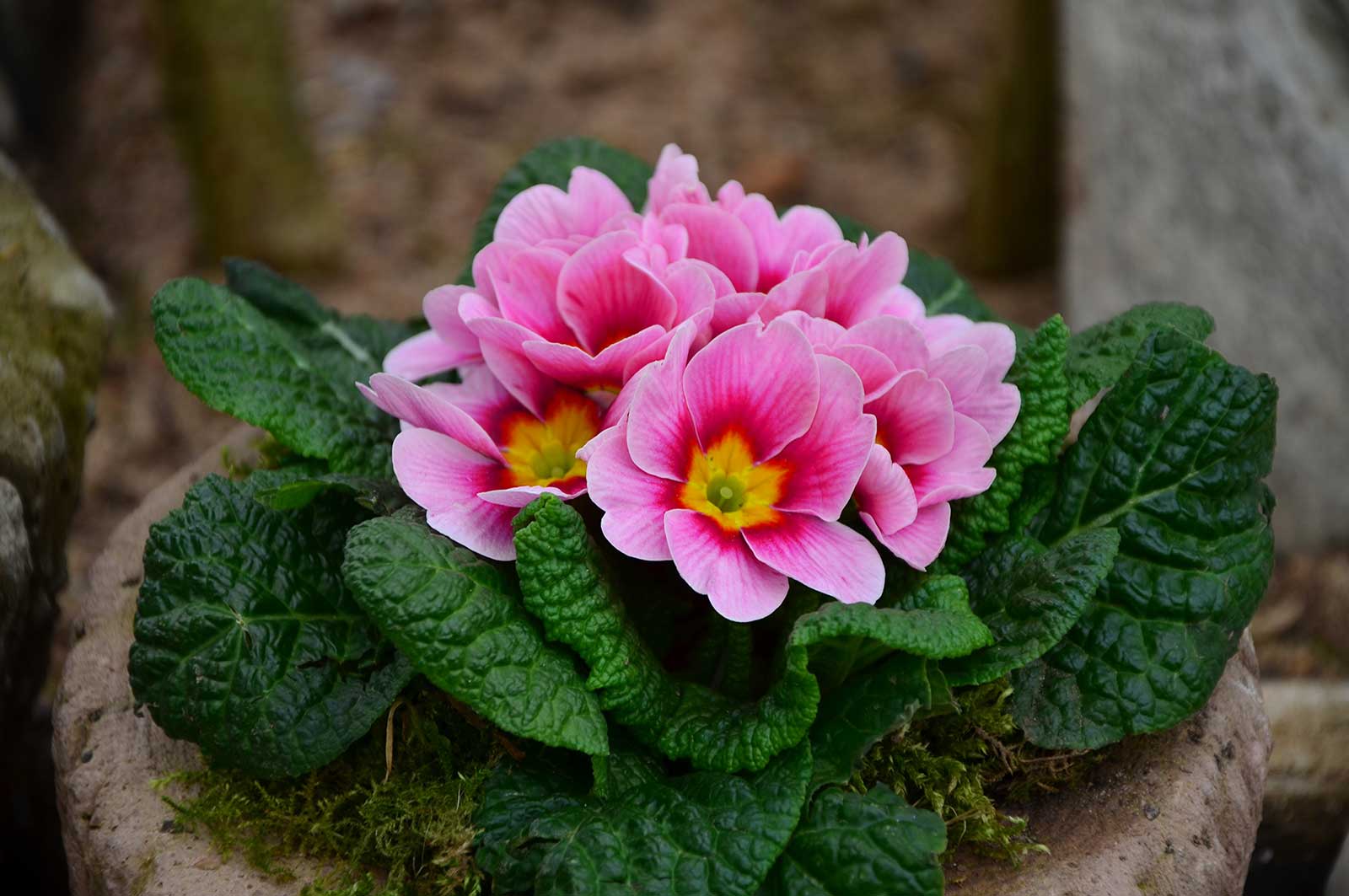
Enjoy the sweet, simple freshness of these harbingers of spring. Primrose flowers (Primula polyantha ) bloom in early spring, offering a variety of form, size, and color. They are suitable for use in garden beds and borders as well as in containers or for naturalizing areas of the lawn.
In fact, when given the proper growing conditions, these vigorous plants will multiply each year, adding stunning colors to the landscape. Blooming often lasts throughout summer and in some areas, they will continue to delight the fall season with their outstanding colors. Most primrose flowers seen in gardens are Polyanthus hybrids, which range in color from white, cream and yellow to orange, red and pink. There are also purple and blue primrose flowers. These perennial plants prefer damp, woodland-like conditions.
Primrose perennials should be planted in lightly shaded areas with well-drained soil, preferably amended with organic matter. Set primrose plants about 6 to 12 inches apart and 4 to 6 inches deep. Water thoroughly after planting. The primrose flower also appreciates light applications of organic fertilizer throughout the growing season. Keep primrose plants looking their best with regular pruning of dead leaves and spent blooms.[/ultimate_modal]
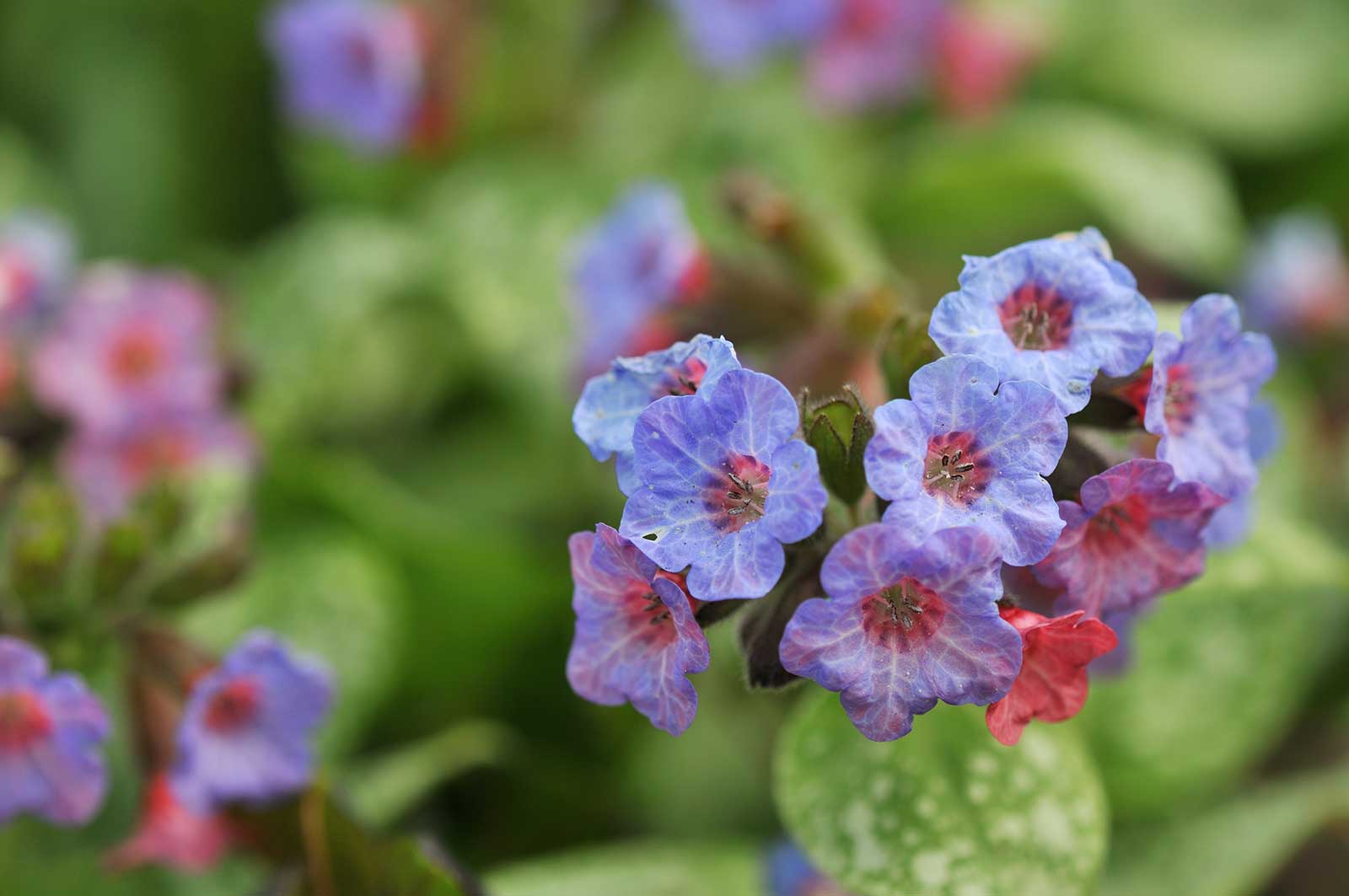
 Pulmonaria is a very early spring blooming plant with the unfortunate common name of lungwort. While it used to be used medicinally for lung ailments, today it’s known mostly as a perennial flower that will bloom in the early spring before most other flowers. It’s a woodland plant and prefers either a shady location or at least a moist one. Pulmonaria is a large genus with varieties that will grow almost everywhere. Its season is early spring when most other plants are barely poking out of the ground. It flowers in brilliant blue, pink, and white. Many will change color, as they mature and are pollinated. A change in the pH of the petals is responsible for the color change.
Bees love the blossoms. Its oval, pointed leaves can be solid green of varying intensity or variegated with spots or splashes of white. The leaves have a layer of fuzz on them and the color variations make them look like they were splashed with bleach. Pulmonaria plants are naturals for shady woodland gardens. The white-flowered varieties really glow against the green foliage. You can also plant them in a sunny border, among later maturing perennials, for a shot of spring color.
Pulmonaria can handle full sun in the spring and the leaves of taller, summer perennials will provide shade for it later in the season. This flower looks especially beautiful planted with the delicate foliage and soft pink flowers of fringed leaf Dicentra, which blooms at about the same time. Another smart place to plant them is under the shade of a large tree. They will thrive in this shady spot.
[/ultimate_modal]

 Tulips are the most colorful of all spring flowers. They are also one of the easiest flowers you’ll ever grow. Just plant the bulbs in fall for blossoms the following spring. Tulips should be planted in good soil that is well-drained and never soggy. Peat moss or compost may be added to help improve drainage.
Tulip flowers are usually cup-shaped with three petals and three sepals. There’s a tulip for every setting, from small “species” tulips in naturalized woodland areas to larger tulips that fit formal garden plantings from beds to borders. The upright flowers may be single or double, and vary in shape from simple cups, bowls, and goblets to more complex forms. Height ranges from 6 inches to 2 feet. One tulip grows on each stem, with two to six broad leaves per plant.
Tulips will fill your yard with color long before most other plants have emerged from their winter sleep. Create a warm welcome by planting a bed of tulips along your front walk or in front yard flower beds. Tulips look great in mass plantings and will attract the admiring eyes of everyone who passes by. The more tulips you plant, the better the show.[/ultimate_modal]

 Pansies are the colorful flowers with “faces.” A cool-weather favorite, pansies are great for both spring and fall gardens! Pansies are one of the most popular and recognizable cool weather annuals. There are many cultivars within the genus Viola, and most of them are hybrids of the same handful of species, so there are a lot of similarities, and probably only a botanist really cares which is which. The gardener knows pansies as flowers with almost heart-shaped, overlapping petals in bright colors or bi-colors and often with face-like center markings.
Remove faded/dead flowers to prolong blooming and encourage more flowers to grow. You can use a general, all-purpose fertilizer around your pansies to help them grow. Although pansies are not fussy plants, they will grow best in loose, rich soil with a slightly acidity. As compact, low growers, pansies are ideal for edging and for squeezing between rock walls and paths, as long as they can be removed in summer. They’re a great choice for early and late season containers.
[/ultimate_modal]

 Solomon’s seal is a classic shade garden plant that adds an architectural component to garden beds, thanks to its arching stems. In spring, these stems become lined with small, bell-shaped white blooms on the undersides. These blossoms later give way to blue-black berries that are adored by wildlife. The spreading and clumping habit of this plant makes a great tall groundcover.
Easily grown in moist, humus, organically rich, well-drained soils in part shade to full shade. Best performance occurs in cool sun-dappled shady areas. Dislikes hot summer conditions. Slowly spreads by thin rhizomes to form colonies in optimum growing conditions. Polygonatum odoratum, commonly called fragrant Solomon’s seal, is a rhizomatous, shade-loving perennial that typically grows to 18-24” tall on low, gracefully arching, angled (as opposed to cylindrical), unbranched stems.
The flowers are often pleasantly fragrant. Once flowers have finished blooming, berries soon take their place. These berries begin green and age to purple-blue, then turn black in color. They are poisonous to humans, but birds delight in eating them. Solomon’s seal plants like dappled shade, rich and organic soils, and plenty of moisture—think woodland plants. Once they are established, they can survive short droughts fairly well. During longer dry periods, however, they do appreciate a good drink of water.[/ultimate_modal]

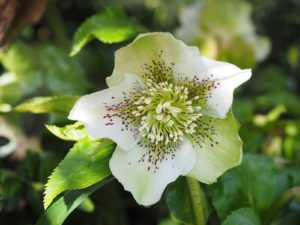 Hellebores get their common name, Lenten rose, from the rose-like flowers that appear in early spring around the Christian observance of Lent. The “blooms” (which are actually sepals that protect the true flowers) last for several months, from February until May, and the foliage is evergreen in all but the coldest regions. This genus of perennials with toothed, leathery leaves and distinctive blooms makes a happy addition to the spring garden. The often very long-lasting (6 to 8 weeks) flowers are produced in very early spring and run the gamut from white, green, pink, purple, cream, and sometimes spotted. Best grown in groups in a woodland or shady border.
Tolerates a wide range of soils and exposures, from neutral to acid soil and sun to part shade. Year round foliage persists through shade and snow and is fairly deer and rabbit resistant. Flowers in early spring with daffodils and tulips. Many gardeners like to plant hellebores on a hillside or in raised flower beds to better enjoy their downward-facing blooms. When transplanting hellebores directly from their nursery containers, be sure to shake off the potting mix and free up any bound roots.
[/ultimate_modal]
These are just a select few of the many species of plants that flower during the spring season. They are in essence the “heralds of a new gardening season” provided by Mother Nature herself. If you find yourself lacking a green thumb, give us a call and we’d be happy to discuss some garden bed design build ideas to improve your property both visually and surprisingly monetarily at the same time.
When you landscape your yard, you can rest assured that your investment will increase your home’s market value. Homebuyers are usually willing to spend more on a house if it has professional landscaping, both front and back. Landscaping improves quality of life in cities with several physical and psychological benefits. For example, just looking at plants is shown to reduce blood pressure. Walking through a natural environment, even in the middle of a city, improves attention and memory. People living in neighborhoods with community green spaces report lower stress levels and lower healthcare costs.
It’s all there just waiting to happen. Give us a call today. We’ll be happy to guide you along the garden path.